
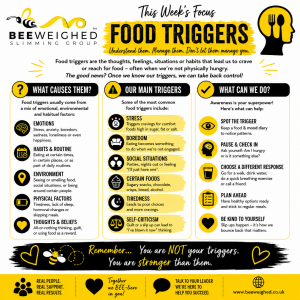
This Week’s Meeting Topic: Understanding Food Triggers
Recognise Them • Manage Them • Take Back Control
Have you ever found yourself standing in front of the fridge without actually feeling hungry? Or reached for chocolate after a stressful day, even though you’d just eaten? If so, you’re not alone.
This week we’re talking about food triggers – one of the biggest reasons many of us struggle with our weight. The good news is that once you understand your triggers, you can start to take control instead of letting them control you.
What is a food trigger?
A food trigger is anything that makes you want to eat when your body doesn’t actually need food. Hunger is physical. Triggers are often emotional, environmental or habitual.
The key is learning to recognise the difference.
Common food triggers
😟 Stress
When we’re stressed, our bodies release hormones that can increase cravings for sugary, fatty and comforting foods. Food may make us feel better for a few minutes, but it doesn’t solve the problem.
Try this: Take a five-minute walk, practise deep breathing or enjoy a cup of tea before reaching for food.
😴 Tiredness
Lack of sleep affects the hormones that control hunger and fullness, making us crave quick-energy foods.
Try this: Prioritise sleep and avoid skipping meals during busy days.
😔 Emotions
Whether it’s sadness, boredom, loneliness, anxiety or even happiness, many of us have learned to celebrate or comfort ourselves with food.
Ask yourself: What am I really feeling right now?
🍫 Certain Foods
Some foods can be difficult to stop eating once we’ve started. Biscuits, crisps, chocolate and sweets are common examples.
Try this: Keep tempting foods out of sight or buy smaller portions rather than family-sized packs.
👨👩👧 Social Situations
Meals out, parties and family gatherings can encourage us to eat more than we planned because everyone else is.
Remember: You don’t have to eat everything that’s offered. It’s okay to say, “No thank you.”
🔁 Habits
Sometimes we eat simply because it’s what we’ve always done.
- Toast with a brew every evening.
- Crisps while watching television.
- Chocolate after dinner.
These habits become automatic.
Try changing the routine: Swap snacks for fruit, yoghurt, popcorn or simply enjoy your drink without food.
How to break the cycle
The first step isn’t perfection—it’s awareness.
When you feel like eating, ask yourself these three questions:
- Am I physically hungry?
- What am I feeling right now?
- What do I actually need?
Sometimes you need food.
Sometimes you need rest.
Sometimes you need company.
Sometimes you just need a moment.
This week’s challenge
Keep a simple Trigger Diary.
Each time you feel like eating outside your planned meals, write down:
- The time
- How you were feeling
- What happened just before
- Whether you were actually hungry
- What you chose to do
By the end of the week, you’ll probably notice patterns you’ve never seen before.
Remember…
Food isn’t the enemy.
Understanding why you eat is just as important as what you eat.
The more aware you become of your triggers, the easier it becomes to make choices that support your goals rather than sabotage them.
One trigger recognised is one step closer to lasting success.
🐝 BeeWeighed Thought of the Week:
“You can’t always control what triggers you, but you can choose how you respond. Small choices, made consistently, create big results.” 💛